Telephone: 86-18937010258
86-0370-5700888
Phone: 86-18438296999
Email : henanyonggong@163.com
Website: en.hnygjx.com.cn
Production base: 2 xishan road, yongcheng economic and technological development zone, henan province
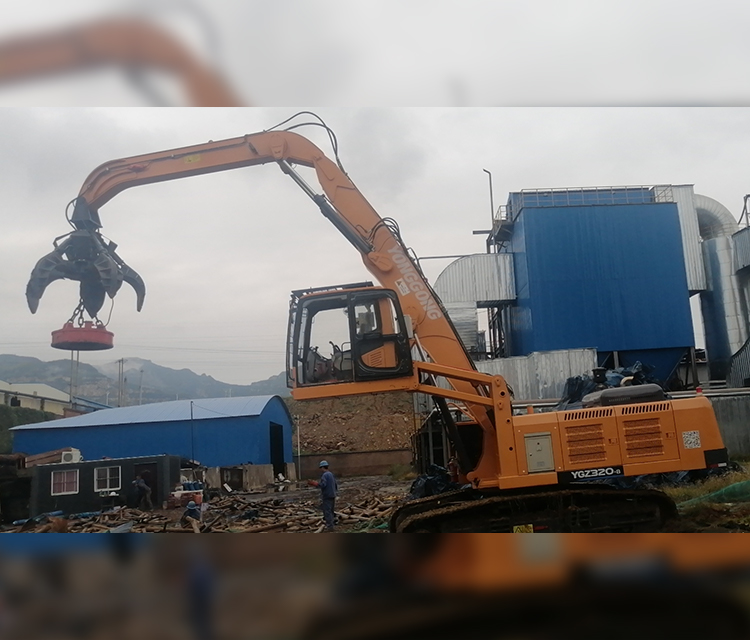
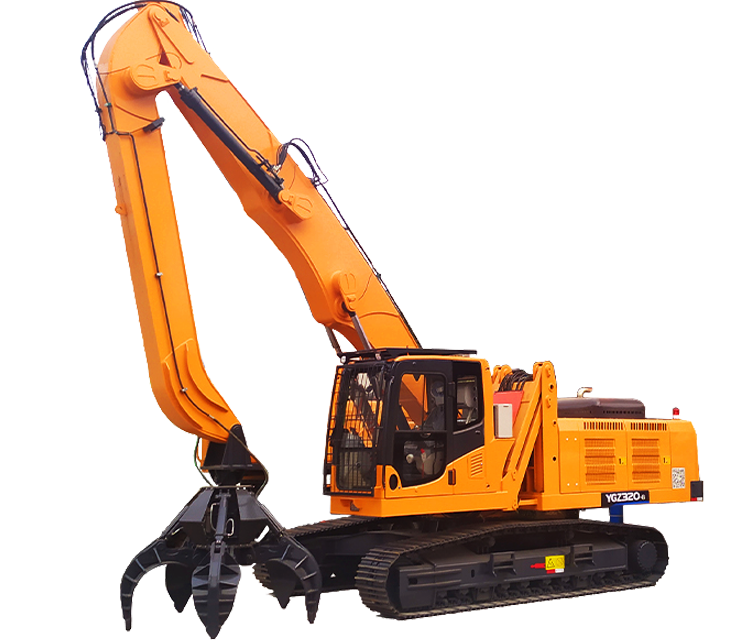
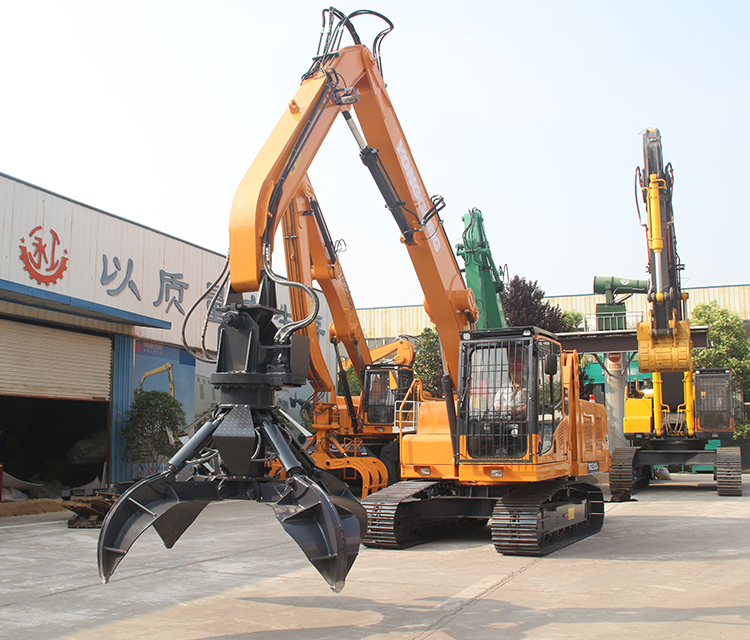
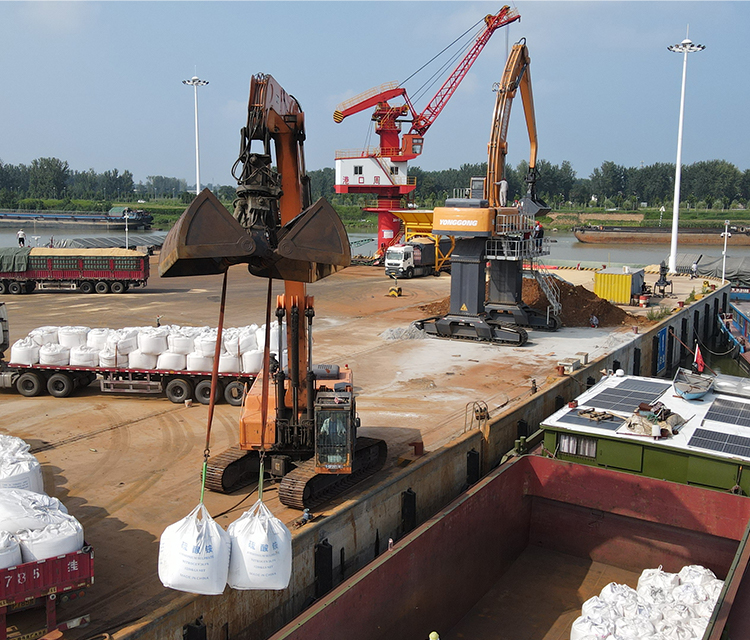
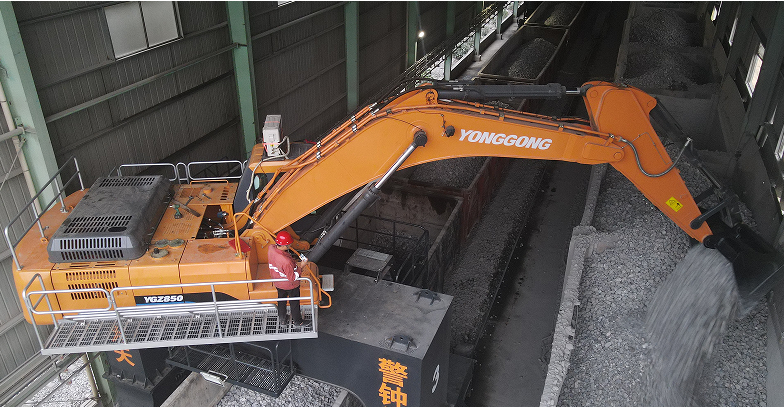
During the coal loading and unloading process of the coal unloader, a safety protection system needs to be constructed from five dimensions: equipment safety, operation norms, environmental control, personnel protection, and emergency management. The specific measures are as follows:
I. Equipment Safety: Ensure stable mechanical performance
Daily inspection and maintenance
Key component inspection: Before daily operation, check the wear conditions of components such as the grab bucket, steel wire rope, brake, and limiters. For instance, if the number of broken wires within one lay of a steel wire rope exceeds 5%, it should be replaced immediately. When the thickness of the brake pad is less than 50% of its original thickness, it needs to be adjusted or replaced.
Lubrication and tightening: Regularly apply lubricating oil to bearings, gears and other parts, and check if the bolt connections are loose to prevent accidents caused by overheating due to friction or component detachment.
Electrical system inspection: Check whether electrical components such as cables, plugs, and contactors are damaged or aged to avoid the risk of short circuits or leakage.
Verification of safety devices
Limit protection: Test whether the limit devices for the lifting, lowering and rotating of the grab are sensitive to prevent equipment damage or overturning caused by over-range operation.
Emergency stop button: Ensure that the emergency stop button is functioning properly, which can cut off the equipment power within 3 seconds to prevent the accident from escalating.
Sound and light alarm device: Check if the alarm is loud and clear. It should issue a warning signal when the equipment starts, moves or the grab opens and closes to alert the surrounding people to pay attention.
Ii. Operating Norms: Regulate Dangerous behaviors
Basic operation requirements
Smooth operation: High-speed start-up or emergency braking is prohibited to prevent the grab from colliding with the coal pile or the edge of the carriage, reducing equipment impact and material spillage.
Take materials straight up and down: It is strictly prohibited to pull at an Angle, grab crookely or swing the grab bucket to prevent the steel wire rope from coming out of the groove or the grab bucket from deforming, which may cause the equipment to lose control.
Load limit: Grasp coal according to the rated load of the equipment. Overloading operation is strictly prohibited to prevent wire rope breakage or structural damage. For instance, if the rated load of the equipment is 10 tons, the single coal grasping volume must not exceed 10 tons.
Control of hazardous areas
Rotation radius isolation: Set up a "No Approach" warning sign at the edge of the rotation radius of the grab. During operation, no one is allowed to stay or cross within the rotation radius.
No Climbing: It is strictly prohibited for operators to climb the grab boom or the grab in a suspended state to prevent accidents of falling from heights.
Safety of operations inside the carriage: If it is necessary to enter the carriage to clear the remaining coal, the power supply of the equipment must be cut off first, a "Do Not Close" warning sign hung, and a dedicated person must be assigned to supervise.
Response to Special Working conditions
Night work: Ensure that the work area is well-lit, with a light intensity of no less than 50lux, to avoid operational errors caused by unclear visibility.
Rainy and snowy weather: Reduce the operation speed in a slippery environment and add anti-slip measures for the equipment (such as installing anti-slip chains) to prevent slipping or overturning.
Iii. Environmental Control: Eliminate External Hazards
Cleaning of the operation area
Track inspection: Clear the coal cinder and debris on the track every day to ensure the track is flat and free of obstacles, preventing equipment from derailing.
Ground stability: Check the ground bearing capacity of the operation area to prevent equipment from tilting or overturning due to ground settlement. For instance, when working on soft soil foundations, steel plates or crushed stones need to be laid for reinforcement.
Dust prevention and ventilation
Spray dust suppression: When the grab is grasping and unloading materials, the spray device is activated to reduce dust flying and improve the working environment. For instance, the spray water volume should be controlled at 5-10L/min to ensure that the dust concentration is below 10mg/m³.
Ventilation and air exchange: When working in a closed or semi-closed coal bunker, install ventilation equipment (such as axial flow fans) to ensure air circulation and prevent the accumulation of harmful gases such as carbon monoxide.
Iv. Personnel Protection: Reduce individual risks
Personal protective equipment (PPE
Head protection: Operators must wear safety helmets to prevent their heads from being injured by falling objects.
Dust mask: When working in an environment with a lot of dust, wear a dust mask of N95 or above to reduce the inhalation of dust.
Protective gloves and safety shoes: Wear cut-resistant gloves and anti-slip safety shoes to prevent your hands from being cut by steel wire ropes or your feet from being hit by heavy objects.
Safety training and assessment
Operator training: Regularly organize safety operation procedure training to ensure that operators are familiar with equipment performance, emergency handling procedures and accident cases.
Assessment and certification for Employment: Operators must pass a safety assessment and obtain an operation certificate before taking up their posts. It is strictly prohibited to operate without a certificate or after drinking alcohol.
V. Emergency Management: Rapid Response to Accidents
Formulation of emergency response plans
Coverage of accident types: Specialized emergency response plans are formulated for accident types such as mechanical injuries, falls from heights, object strikes, and fires, clearly defining rescue procedures and responsible persons.
Drill and Evaluation: Organize an emergency drill once every quarter to simulate scenarios such as equipment failure and personnel injury, to test the feasibility of the plan and the emergency response capabilities of the personnel.
Emergency equipment and material reserves
First aid equipment: At the work site, first aid kits, stretchers and other equipment should be provided, and it should be ensured that the operators master basic first aid skills (such as cardiopulmonary resuscitation, hemostasis and bandaging).
Fire-fighting equipment: Install fire extinguishers, fire-fighting sand and other fire-fighting equipment around the equipment, and regularly check their effectiveness to prevent the expansion of fire accidents.
Accident report and investigation
Immediate report: After an accident occurs, the operator should immediately stop the operation, protect the scene and report to the relevant department. A written accident report should be submitted within 24 hours.
Cause analysis and rectification: Establish an accident investigation team to analyze the cause of the accident, formulate rectification measures and follow up on their implementation to prevent similar incidents from happening again.